
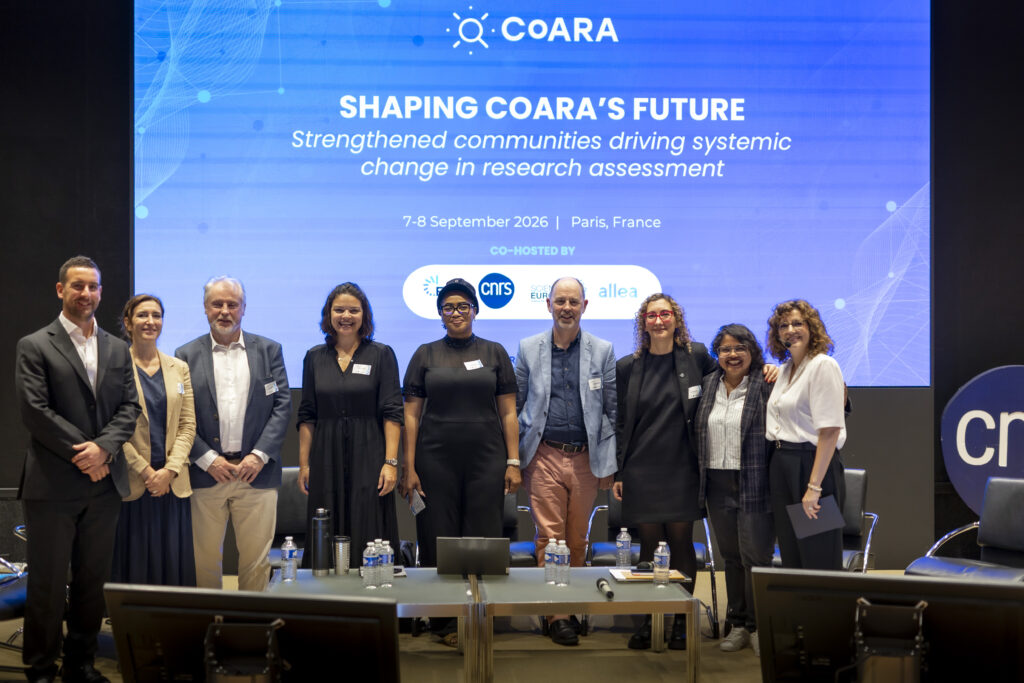
On 7-8 September 2026, a CoARA conference brought together 130+ representatives from universities, academies, funding organisations, research performing organisations, national authorities, policymakers, and more in Paris, France. Co-hosted by the ESF, CNRS, Science Europe, and ALLEA, the event marked the first time that CoARA’s diverse implementation communities, including Working Groups, National Chapters, and Cascade Funding beneficiaries joined together in-person to share their progress and first results.
Providing an opportunity to take stock of what has been built so far, the conference showcased key CoARA outputs, including experiences, case studies, tools, pilots, recommendations, and other resources. Many of these resources are currently available in the evolving CoARA Collection, a community-owned resource library.
The conference focused on exploring a shared question across the two-days of discussions: how do we move from building the foundations of research assessment to carrying them forward and embed them into everyday assessment practices?
“Institutional commitments alone will not deliver systematic change. That change depends on communities […] willing to learn from one another, challenge established practices and build new ones together. And this is, I believe, where CoARA’s greatest strength lies. It has created not only a framework for reform, but a community capable of carrying that reform forward,” said President of ALLEA, Prof. Pawel Rowiński.
Building on this sentiment, CoARA Chair, Prof. Henk Kummeling highlighted a central focus for the next phase of CoARA: “To bridge the gap between principle and practice, transform isolated pilots to scalable solutions, and support institutions in embedding responsible research assessment into their everyday processes and decision-making structure.”
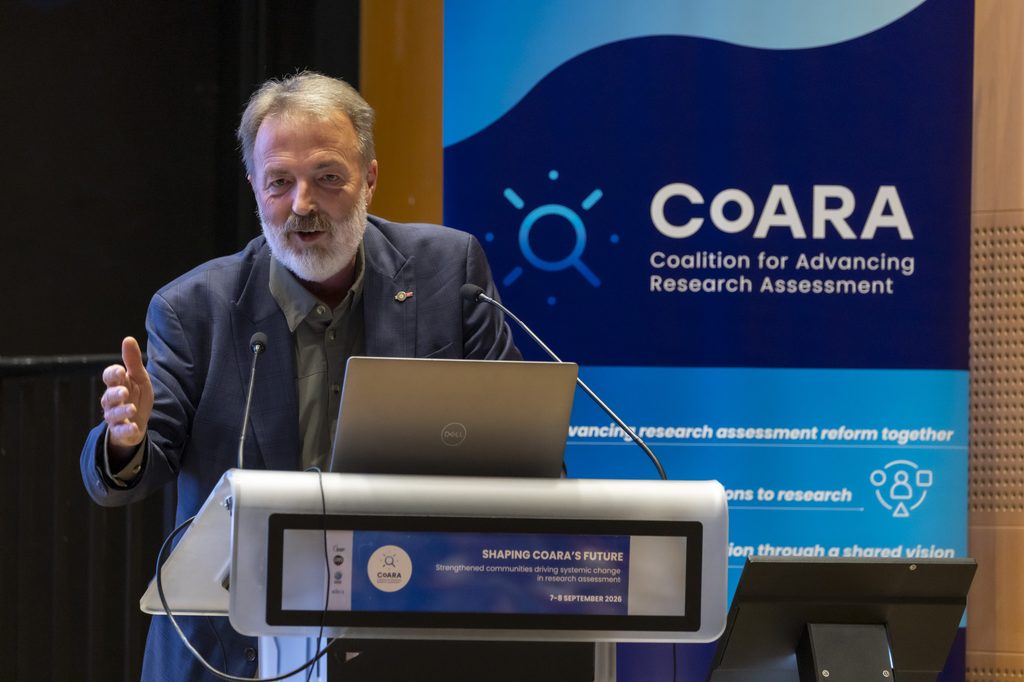
Across panel discussions and presentations, the conference highlighted key enablers for reform, including the role of visible support from leadership and buy-in from HR, connecting and upscaling fragmented efforts, and enhancing alignment across policy levels. Panel discussions also touched upon the potential risks and opportunities of AI to change assessment practices, especially in peer review methods.
Case studies, tools, and recommendations from Working Groups and Cascade Funding projects showcased the breadth of work achieved to date, which was further highlighted in the CoARA Community Poster exhibition. In order to make these key outputs more impactful, however, one message was clear: greater alignment across initiatives and policy levels is a priority for accelerating reform.
Expanding beyond the CoARA community, the conference offered an opportunity to engage with representatives from fellow research assessment initiatives operating on a global scale, including the Barcelona Declaration, DORA, FOLEC-CLACSO, GRC, UNESCO, and OECD. Exploring points of connection between initiatives, the discussions across panels and presentations reinforced how research assessment reform acts as an enabler for other ERA priorities, including Open Science, gender equality, knowledge valorisation, and strengthening education-, impact-, and innovation-focused career paths. Moving forward, increased dialogue between National Chapter Co-Chairs and the ERA Forum will play an important role in ensuring effective alignment between national policies, funding requirements, and institutional practices.
The next phase of CoARA will see targeted and intensified support to ARRA signatories in translating of their commitments into everyday assessment practices, increased connectivity between key implementation groups, and strengthened sustainability and community ownership of the CoARA. Investing in monitoring, self-assessment and evidence-informed learning will serve as a backbone for all these priorities.
“We have proved that reform can be built. The question is whether it can be carried,” commented Dr. Yensi Flores Bueso, Global Young Academy.
The conference demonstrated the strength of our collective efforts and the crucial role of creating links between them, as CoARA moves into its next phase to carry reform forward into lasting, systemic change.
Learn more about the conference and key project outputs at the following links: